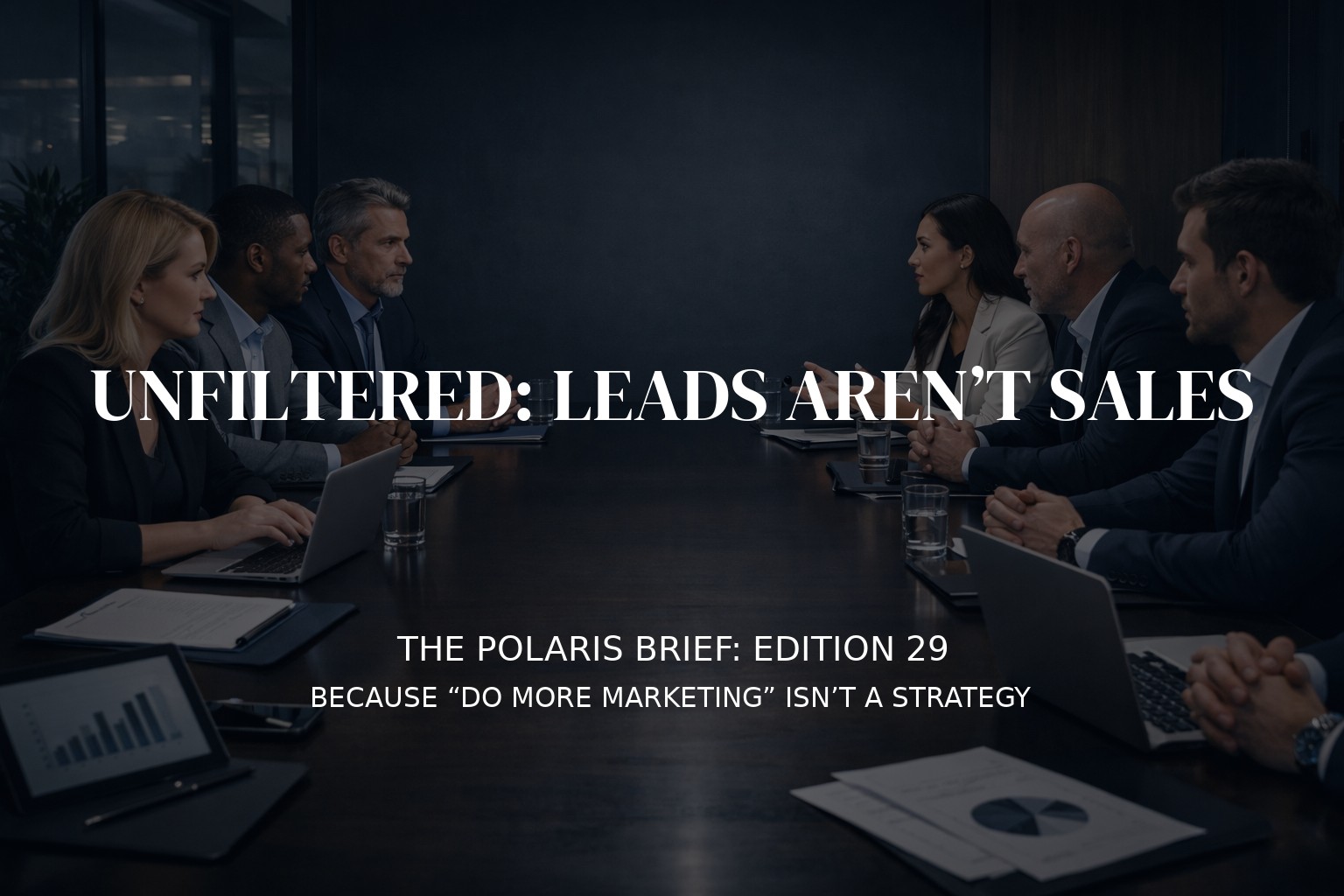
Alignment as a Growth Strategy in Advanced Manufacturing
Advanced manufacturing organizations are built for precision. Processes are engineered. Tolerances matter. Systems are optimized.
Marketing, however, is often the outlier.
In many advanced manufacturing companies, marketing exists in isolation—separate from sales, disconnected from operations, and misunderstood internally. The result isn’t just underperforming campaigns. It’s missed growth, inefficient pipelines, and a market that doesn’t fully understand the value being delivered.
Alignment between marketing, sales, and operations is no longer optional for advanced manufacturers. It is a prerequisite for scalable growth.
Why Misalignment Is So Common in Advanced Manufacturing
Advanced manufacturers don’t struggle with execution. They struggle with translation.
Operations teams understand process capability, throughput, quality control, and lead times. Sales teams understand customer requirements, pricing pressure, and competitive dynamics. Marketing is often left trying to connect the dots—without access to either side in a meaningful way.
This creates familiar problems:
- Marketing content that sounds generic or vague
- Sales teams rewriting or ignoring marketing materials
- Operational capabilities that never make it into market-facing messaging
- Buyers who don’t understand what differentiates one manufacturer from another
The issue is not talent. It’s structure.
The Cost of Operating in Silos
When marketing, sales, and operations operate independently, growth becomes reactive instead of intentional.
Sales chases opportunities marketing didn’t anticipate. Marketing promotes capabilities operations can’t scale. Operations builds efficiencies customers never hear about.
Over time, this misalignment shows up in measurable ways:
- Longer sales cycles
- Lower-quality inbound leads
- Price-driven negotiations instead of value-driven conversations
- Reduced visibility in search and industry research
Advanced buyers—especially engineers, procurement teams, and technical decision-makers—research extensively before ever reaching out. If internal alignment is weak, that research phase works against you.
Alignment Starts With Shared Understanding, Not Software
Many organizations try to solve alignment with tools: CRMs, dashboards, automation platforms. Those tools only amplify whatever structure already exists.
True alignment begins with shared understanding.
Marketing needs to understand:
- How products are actually specified and sold
- Where operational constraints exist
- Which capabilities truly differentiate the organization
Sales needs clarity on:
- What problems marketing is solving upstream
- How positioning supports long-term pipeline health
- Which messages are designed to educate versus convert
Operations needs visibility into:
- What the market is being told
- How demand is being shaped
- Why certain opportunities are prioritized
Without this foundation, even the best technology stack underperforms.
Turning Operational Strength Into Market Clarity
Advanced manufacturers often undersell themselves—not because they lack capability, but because they assume the market understands complexity the way they do.
Marketing’s role is not simplification for its own sake. It is structured clarity.
That means:
- Translating technical capability into buyer-relevant outcomes
- Explaining process advantages in ways non-engineers can evaluate
- Making differentiation visible before the first sales conversation
When marketing is informed by operations, content becomes credible. When sales is aligned with that content, conversations become more efficient.
This is where alignment directly impacts growth.
Search Visibility Is an Alignment Problem
Search engines—and generative AI systems—reward clarity, consistency, and authority.
When marketing, sales, and operations are aligned, the organization produces:
- Clear service definitions
- Consistent terminology across teams
- Authoritative explanations of processes and capabilities
- Content that answers real buyer questions accurately
This is exactly what modern search systems surface.
Misalignment, on the other hand, creates fragmented signals: inconsistent messaging, vague positioning, and thin content that fails to earn trust.
How Aligned Teams Scale More Effectively
Aligned organizations don’t just market better—they scale better.
They see:
- Fewer low-quality leads
- Shorter qualification cycles
- Stronger positioning in competitive bids
- More predictable demand patterns
Marketing becomes a strategic function instead of a support role. Sales spends more time selling. Operations builds for real demand, not guesswork.
This is how advanced manufacturers grow without adding unnecessary complexity.
What Alignment Actually Looks Like in Practice
In aligned organizations:
- Marketing participates in operational and sales discussions early
- Sales feedback informs content strategy continuously
- Operational realities shape messaging, not the other way around
- Everyone understands who the buyer is and how they evaluate value
This isn’t about weekly meetings or extra layers of approval. It’s about designing marketing as a bridge, not a department.
Why This Matters Now
Advanced manufacturing buyers are more informed than ever. They rely on search, peer validation, and technical content long before engaging sales.
If your organization isn’t aligned internally, that research phase works against you.
If it is aligned, marketing becomes a compounding asset—educating the market, supporting sales, and reinforcing operational excellence at scale.
Facts
1. Why is marketing alignment especially important for advanced manufacturing?
Because advanced manufacturing involves complex capabilities that buyers must understand before engaging. Misalignment leads to confusion, longer sales cycles, and price-driven decisions.
2. How does alignment impact SEO and search visibility?
Aligned teams produce clearer, more authoritative content—exactly what search engines and AI systems prioritize when ranking and summarizing information.
3. Can small or mid-sized manufacturers achieve this alignment?
Yes. Alignment is structural, not headcount-driven. Many smaller manufacturers see the biggest gains because clarity compounds faster.
4. Where should manufacturers start if alignment is weak today?
Start with shared understanding: clarify who the buyer is, how value is evaluated, and which capabilities truly differentiate the organization.
A North Star Perspective
At North Star Marketing, alignment is not a buzzword. It’s the foundation of sustainable growth—especially for organizations built on precision, process, and performance.
Marketing works best when it reflects how the business actually operates.